
Le VIIIè Colloque des Sciences, Cultures et Technologies de l’Université d’Abomey-Calavi aura lieu du 25 au 29 septembre 2023 à Cotonou au Bénin, sur le thème de la « Valorisation des savoirs endogènes, gage d’un développement durable ».
En marge de cet évènement, le Collège d’Ingénierie en Energie, Infrastructures de transport et environnement (COE EIE) de l’Ecole Polytechnique d’Abomey Calavie (EPAC), le Centre d’Excellence africain pour l’EAu et l’Assainissement C2EA de l’Institut National de l’Eau (INE), le Centre d’Excellence africain en sciences mathématiques, informatiques et application (CEA SMIA) de l’Institut de Mathématiques et de Sciences Physiques (IMSP) – membres du réseau de recherche d’excellence panafricaine pluridisciplinaire RES’EAU sur la gestion durable de l’eau – réuniront près de 80 doctorants lors de la deuxième édition des doctoriales multidisciplinaires, lors d’ateliers thématiques, dont un dédié aux thématiques du RES’EAU « Eau, Assainissement et Changements Climatiques ».
Une belle occasion pour les doctorants du réseau de présenter et de valoriser leurs travaux et de promouvoir la recherche et la diffusion des résultats de recherche !
Pour en savoir plus sur ce colloque et participer : https://indico.uac.bj/event/2/
Programme détaillé du colloque ⏬


🇨🇮 Le réseau des Centres d’Excellence africain pour la gestion durable de l’eau RES’EAU a tenu un atelier régional de formation du 24 au 28 juillet 2023 au sein du Pôle scientifique et d’Innovation (PSI) de l’Université Félix Houphouet-Boigny, Centre d’Excellence africain sur le Changement Climatique, la Biodiversité et l’Agriculture Durable (CEA-CCBAD), Centre National de Calcul de Côte d’Ivoire (CNCCI) sur le Campus de Bingerville, en Côte d’Ivoire.
Parmi les continents considérés comme les plus exposés au changement climatique, l’Afrique apparaît comme l’un des plus vulnérables. Du fait de la faible capacité d’adaptation, les événements climatiques extrêmes y ont des incidences souvent dramatiques. Les pays africains sont vulnérables aux changements climatiques en raison de leurs modèles économiques basés sur l’agriculture. D’où l’intérêt d’approfondir nos connaissances sur l’évolution du climat régional et ses impacts sur les secteurs d’activités stratégiques pour un développement durable.
Cependant, les projections régionalisées ne peuvent être utilisées directement à des fins d’études d’impact à l’échelle locale, et ce en raison de deux problèmes principaux : elles sont biaisées par rapport aux observations et leur échelle spatiale est trop grossière pour certaines applications.
Afin de combler cet écart entre les informations nécessaires aux experts pour des études d’impact et les données des modèles régionaux climatiques, hydrologiques et agronomiques disponibles, des méthodes de correction de biais et de descente d’échelle statistique sont mises en œuvre pour corriger les variables du modèle et rendre la distribution statistique des données quotidiennes identiques à la distribution observée en chaque point.
Cet atelier de formation, qui a réunit 20 chercheurs avait donc pour objectif de travailler sur les données environnementales fiables et corrigées nécéssaires pour l’élaboration et l’évaluation des politiques et pour soutenir les politiques d’adaptation, de planification et de réduction des risques et catastrophes dans 4 principaux domaines : la sécurité alimentaire et l’agriculture ; l’eau et les catastrophes ; la météorologie et le climat, l’utilisation des terres, les zones côtières et la gestion des forêts, l’aménagement du territoire.
Cet atelier de renforcement des capacités est soutenu par le Centre d’Excellence Africain CEA-CCBAD, le programme ACE Partner (projet RES’EAU), le Programme d’Appui Stratégique à la Recherche Scientifique (PASRES), et par ATOS-BULL. Dans le cadre des activités du CNCCI, plus spécifiquement à l’initiative de son Pôle de Simulation Numérique (PSN) « Climat et Développement Durable (CLIM2D) », porté par l’Université Félix Houphouët Boigny et soutenu par l’IRD, le CNRS, WASCAL et le CEA-CCBAD, cet atelier est placé sous l’égide de la Direction Générale de la Recherche et de l’Innovation (MESRS), et le CAMES.
Rejoignez-nous le 23 mars 2022, de 13h30 à 15h00 – Salle 13 EXPO pour une table ronde multidisciplinaire afin d’aborder les principaux enjeux scientifiques régionaux pour la GIRE dans les territoires miniers et présenter des solutions innovantes pour une meilleure GIRE dans les territoires miniers.
● Mme Rokhaya Diene Samba, directrice de la géologie du Sénégal.
● M. Zakary Bamba, Union des petites mines, UEMOA.
● Mme Gordana Kranjac-Berisavljevic, Centre ouest-africain pour l’eau, l’irrigation et l’agriculture – WACWISA.
Agriculture – WACWISA
● Institut de recherche pour le développement.
● Mme Hela Karoui, 2IE
● Mme Marie Thérèse Laguerre, Véolia.
● M. Samson Oduro Kwarteng, CEA eau et environnement, université KNUST.
● M. Alphonse Yao, CEA Mines et environnement INPHB.
● M. Mory Kourouma, CEA Mines et sociétés de Boké.
● M. Mahamadou Ousman, CEA Environnement minier de Boké.
● M. Maissa Mbaye, CEA MITIC
● Mme Mariama Diallo, CEA Prévention et contrôle des maladies transmissibles,
Université G. A Nasser – PCMT
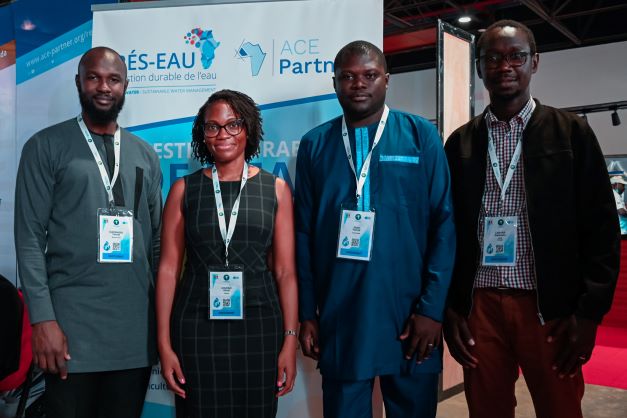
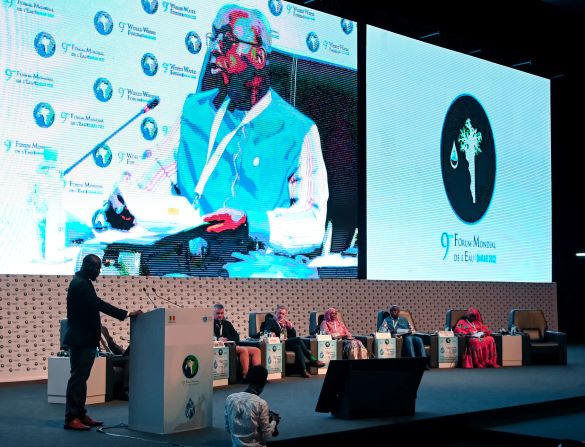

Découvrez toutes nos interventions au Forum Mondial de l’Eau 2022 et nos vidéos en cliquant ici
Nous organisons le 23 mars de 10h45 à 12h15 une session de haut niveau pour un dialogue multi-acteurs et pluridisciplinaire autour de la gestion de la ressource en eau dans l’accélération de la GMV.
Avec la participation exceptionnelle de :
● Mme Garama Saratou Rabiou Inoussa, ministre de l’Environnement et de la lutte contre
la désertification du Niger
● Dr Ali Waidou, ministre de l’Enseignement Supérieur, de la Recherche Scientifique et
de l’innovation du Tchad
● Dr Sakhoudia Thiam, Agence Panafricaine de la Grande Muraille Verte
● La Banque mondiale et l’Agence française de développement
● Les Centres d’excellence africains, l’Observatoire du Sahara et du Sahel, et l’Institut de
recherche pour le développement IRD
● Véolia et la Plateforme des organisations de la société civile pour l’eau et
l’assainissement du Sénégal.

Découvrez nos intervention au Forum Mondial de l’Eau et nos vidéos en cliquant ici
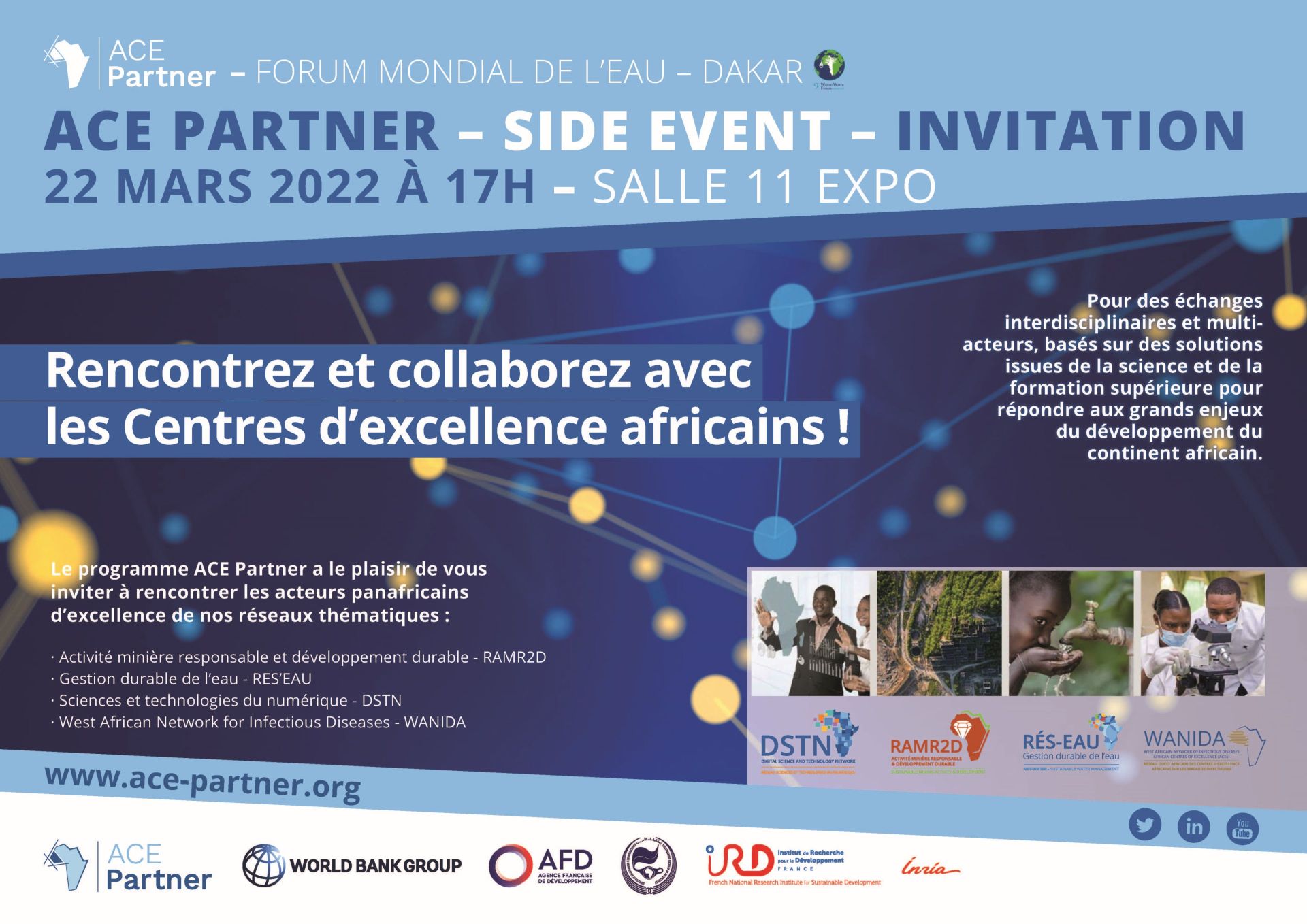
Venez découvrir notre SIDE EVENT au Forum mondial de l’eau le 22 mars 2022, de 17h à 18h – Salle 11 EXPO : « Rencontrez et collaborez avec les Centres d’excellence africains ».
Cet événement, coordonné par l’Institut International d’Ingénierie de l’Eau et de l’Environnement 2iE, du Burkina Faso, propose des échanges interdisciplinaires et multi-acteurs, basés sur des solutions issues de la science et de la formation supérieure pour répondre aux grands enjeux du développement du continent africain.
Il sera l’occasion pour tous les acteurs de la société civile, du monde académique, ou politique, de rencontrer les acteurs panafricains d’excellence de 4 réseaux thématiques :
● Activité minière responsable et développement durable – RAMR2D
● Gestion durable de l’eau – RES’EAU
● Sciences et technologies du numérique – DSTN
● West African Network for Infectious Diseases – WANIDA
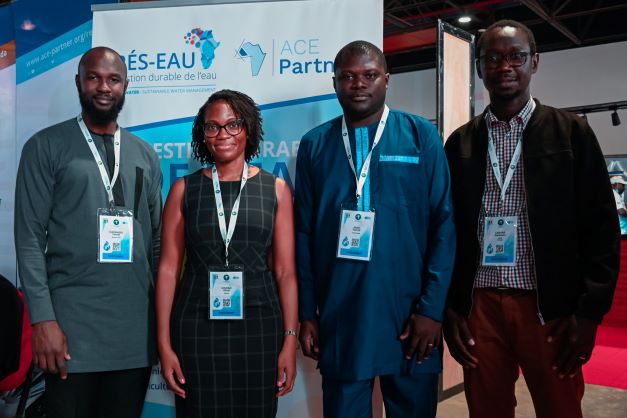
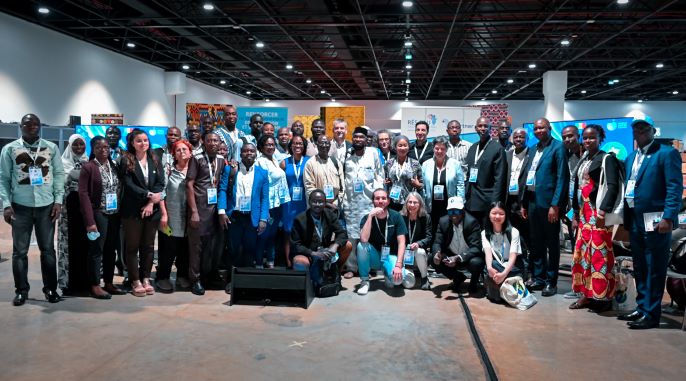
Retrouvez toutes nos interventions lors du Forum Mondial de l’Eau et nos vidéos en cliquant ici !
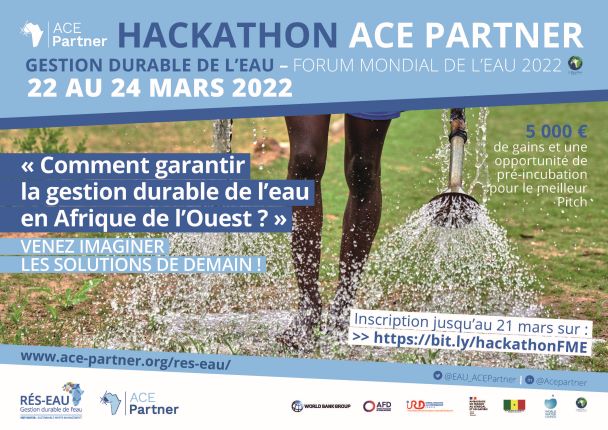
- [APPEL À CANDIDATURES] À l’occasion du Forum Mondial de l’Eau 2022 à Dakar, le programme Ace Partner, avec le soutien de l’ambassade de France au Sénégal, organise un Hackathon sur la Gestion Durable de l’eau en Afrique de l’Ouest !
- Tente de remporter un prix de 5 000€ pour développer ton projet et une place au sein du programme d’Incubation Digital Ace Partner !
- Tu es en Master ou en Doctorat ?
- Tu es sensible aux défis de la gestion de l’eau en Afrique de l’Ouest ?
- L’entrepreneuriat est une voie qui t’intéresse ?
- Alors n’attends plus et postule au formulaire d’inscription au Hackathon Ace Partner ici :
- https://bit.ly/hackathonFME
- Ça sera l’occasion pour toi de :
- Sortir de ta zone de confort !
- Acquérir des connaissances utiles pour monter un business
- Découvrir de nouvelles méthodes de travail collaboratif à travers le Design Thinking
- Construire les solutions de demain en équipe
Pour plus d’information, cliquez ici
Date de clôture : 21/03/2022 à 18h00 GMT
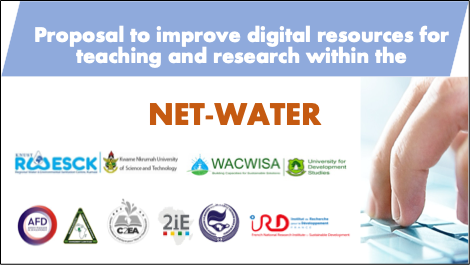
L’effet de la pandémie de covid-19 est largement connu dans le monde entier aujourd’hui. Dans le monde de l’éducation. Les universités ont dû s’adapter rapidement à covid-19 en changeant leur mode d’enseignement des cours qui était physique à un modèle qui prend en compte l’apprentissage à distance. Avec l’impact de covid-19 encore visible aujourd’hui, les ACE de NET-WATER ont décidé de renforcer leur capacité à fournir des cours suivant un modèle d’apprentissage mixte avec des classes en ligne et physiques.
Cette étude est menée par la Disctance learning de l’Université des Sciences et Technologies Kwame N’krumah qui a une grande expérience de l’apprentissage à distance et en ligne.
Les objectifs de l’étude sont les suivants :
- Identifier les problèmes rencontrés par les CEA de RES-EAU lors de la pandémie de Covid-19 pour assurer la continuité des activités d’enseignement et de recherche ;
- Réaliser un diagnostic des ressources et équipements informatiques, des plateformes de la technologie numérique et la connectivité disponibles pour chaque Centre d’Excellence Africain pour l’enseignement, la recherche et le travail à distance ;
- Identifier les forces et faiblesses des enseignants-chercheurs et du personnel de recherche un soutien dédié à l’enseignement et à la recherche à distance ;
- Identifier les besoins de renforcement des capacités des enseignants-chercheurs et des personnels de soutien dans le domaine de l’éducation numérique ;
- Identifier les bonnes pratiques liées à l’utilisation de la science et de la technologie numérique dans la recherche et l’enseignement supérieur au CEA ;
- Identifier les formations à distance proposées par le CEA et les formations qu’ils Envisagent d’offrir à distance ;
- Cartographier les acteurs et partenaires clés impliquées dans le domaine de numérique éducatif et scientifique ;
- Élaborer un plan de renforcement et de développement numérique dans chacun des CEA du RES-EAU comprenant la stratégie, les plans d’actions, les budgets, les sources de financements et possibilités de mutualisation inter-CEA.
Cette étude devrait permettre à chaque CEA de formuler un plan de renforcement des capacités pour l’enseignement mixte.

Christopher Addo, Assistant registraire, Kwame Nkrumah University of Science and Technology
Prof Harouna Karambiri, Directeur du CEA 2iE
Dr. Albert Amoah Saah, Expert en éducation digitale, Kwame Nkrumah University of Science and Technology
Le RES-EAU en partenariat avec Bond’Innov est en cours de réalisation d’une étude pour l’intensification des collaborations entre les CEAs et le secteur socio-économique.
Cette étude a pour objectifs :
- Identifier et cartographier les acteurs socio-économiques potentiels collaborateurs des CEA du RES-EAU dans chacun des pays et dans la sous-région ;
- Déterminer les axes de collaborations potentiels entre le RES-EAU et les différents acteurs identifiés ;
- Mettre en place des mécanismes de facilitation de la collaboration entre le RES-EAU et les acteurs identifiés
- Proposer les termes de référence du premier atelier/cadre de concertation entre les membres du RES-EAU et les acteurs socio-économiques
Cette étude devrait assurer au RES-EAU une augmentation des collaborations avec le secteur socio-économique sur les enjeux clés de la gestion durable de ressources en eau.
Pour en savoir plus sur Bon’Innov : https://bondinnov.com
